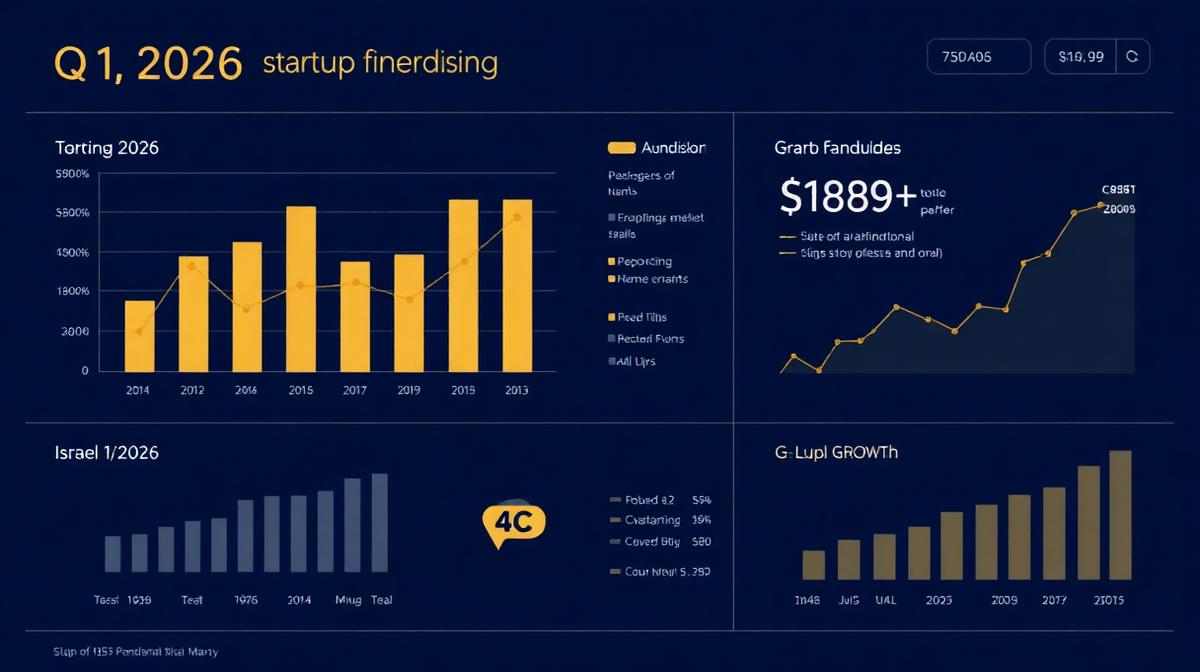
Behind the encouraging headlines about Q1 2026 fundraising, there's a phenomenon hiding: the total number of deals dropped while the average deal size went up. This is not random, and it's not temporary — it's a structural shift in the ecosystem toward fewer companies.
For companies that have already reached Growth Stage, this is good news. For early-stage startups — it's a wake-up call.
Why Is the Money Concentrating?
Three main reasons explain the increasing concentration in the Israeli venture capital market:
- High interest rate environment: Institutional investors that feed VC funds prefer more mature companies with proven performance.
- Memory of 2022–2023: Investors who entered companies too early and suffered down-rounds are being more cautious.
- AI as a filter: Companies that haven't built a clear advantage in AI face explanatory pressure — it's hard to justify a high valuation without answering the AI question.
What Do You Do With This? 5 Practical Steps
- Understand who the LPs are behind the fund: Most active Israeli funds at early stages finance themselves largely from Israeli investors. When approaching a fund, understand its strategy and its capacity for follow-on. An investor that can't do follow-on in your next round is less attractive.
- Build a path to profitability earlier: The sentence "we'll reach profitability in the next round, run ahead" doesn't work in 2026. Clear burn rate, control of runway, and a reasonable path to breakeven within a reasonable timeframe — these are entry requirements, not advantages.
- Build a customer portfolio that speaks for you: In a world where investors are reducing the number of deals, they're looking for external validation. Customers who paid, expanded their agreement, and can give a reference — these are the most important asset to bring to the room.
- Keep a clean cap table: Founders who left with unresolved convertible notes, old SAFE agreements, messy vesting — all of this complicates deals and turns off investors. Due diligence in 2026 is far more rigorous than in 2021.
- Prepare a data room in advance: A data room that includes organized financial statements, key customer agreements, IP documents, ESOP documents, and a clear corporate structure allows you to move fast when there's real interest from an investor — not when the need arises.
What We See in the Field
Startups that come to us after receiving a term sheet spend on average 3–4 weeks in due diligence — but those who prepared a data room in advance close in one to two weeks. Financial preparation shortens the round, and in fundraising rounds, time is money.
What Aleph Offers Early-Stage Startups
We specialize in building the financial foundation that prepares companies for the next round: partial CFO services, financial statements per US GAAP or IFRS, due diligence support, and direct work with lawyers and investors. When the money is concentrating — preparation is not a luxury, it's strategy.
Frequently Asked Questions
Why Is the Money Concentrating?+
What We See in the Field?+
Analyze this article with AI:
Ready to level up your startup finances?
Schedule a free consultation with our team to discuss your specific needs.
Schedule a Call